Forecasts:

Toubkal – Climbing, Hiking & Mountaineering

Toubkal

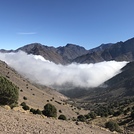
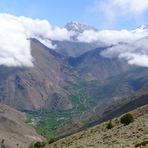
(click to enlarge the photo)

  • Elevation: 4167 m
  • Difficulty: Scramble
  • Best months to climb: Non Snow
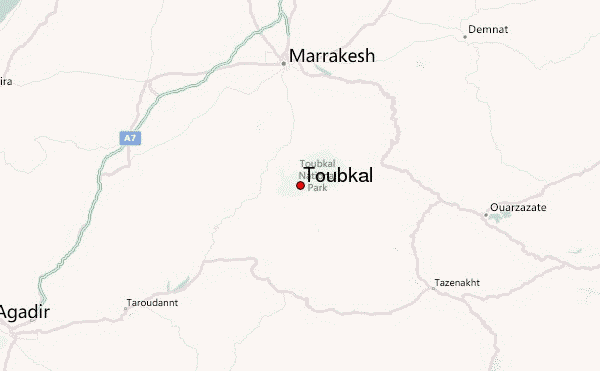
  • Convenient center: Marrakech, Morocco

Toubkal Climbing Notes

AtlasTrekShop from MOROCCO writes:

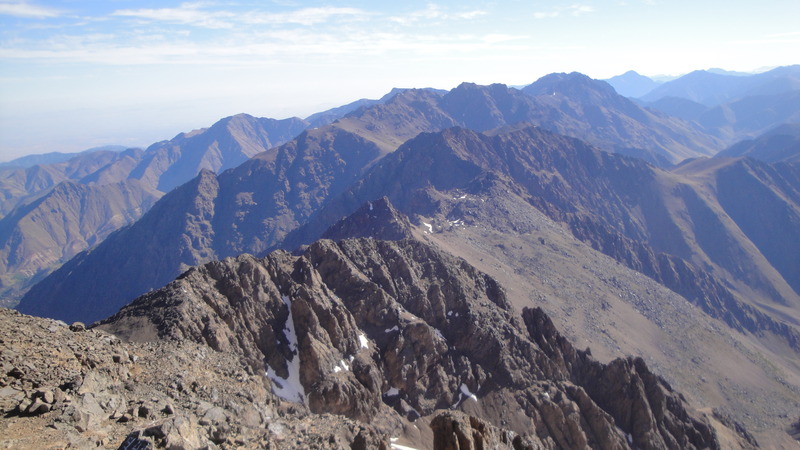
If you want to climb or trek around Toubkal, you will find some useful information here. Standing on the peak in the middle of winter with beautiful snowy summits around you - it's hard to believe you're in Africa. It is a remarkable part of the world to be in.
Most people head up the south col / cwm, as it is the most straightforward way up the mountain. However, there are a lot of other ways up the peak, so if you are into more than just peak bagging - it's really worth exploring the different options.
The following are some basic route descriptions :
South Col / Cwm
In summer conditions there are a number of tracks, which all seem to eventually lead to the top. From the headwall before Tizi-n-Toubkal is the point of most confusion, with tracks going everywhere. However, the peak is obvious in clear conditions - use your common sense and you should make it OK. Toubkal is well known for it's scree slopes. However, over the years, with more and more people climbing the mountain, the scree slopes seem less atrocious than they used to be. In winter conditions, you may end up breaking the trail. If so, get as early a start as you can, like many alpine areas, the snow will soften later in the day making progress harder.

Setting off from the Neltner hut, cross the stream and head east for the obvious hanging valley. From the base of the steep climb there is usually a path crossing from right to left ascending the scree and rocks to gain the valley properly. Follow the valley bottom up, keeping close to the stream bed, ascending all the time until you reach the headwall of the valley. Climb this, exiting onto the slightly less steep area immediately below Tizi-n-Toubkal. After gaining the Tizi, follow the ridgeline NE. The path narrows and steepens, passing crags until the summit plateau becomes visible. Continue on to the iron pyramid. In strong winds beware of being blown off the cliff faces on the ridgeline and summit plateau.

Time to ascend: 3-5 hrs. Descent: 2-3 hrs (Depending on conditions)
North Col / Cwm
Toubkal's north col / cwm route is far more interesting than than the south col route. It also benefits from having fewer people on it. People that climb the north col route, will normally descend by the south col route. This makes a great day out with the advantage of not covering ground already seen.

Start by descending the main valley northwards for a short period. As soon as possible cross the stream and start a rising traverse. After a short time the north col / cwm should begin to be visible, head up to this over the easiest looking ground. Gain the valley properly and keep climbing steeply, passing several rock bands. Look out for parts of a crashed plane en-route. Keep left until you get to the headwall, ascend this by the obvious exit. Head for the col and enjoy the great views. Follow the rocky ridge south which steepens, finally exiting on the summit plateau.

I don't have much experience of winter walking - can I climb Toubkal?
Ok - well that's not going to be a one-line answer! Here are some thoughts!:

# To state the obvious - this is a 4000m peak so you will feel the altitude if you go too quick. The only safeguard if you can call it that, is that the Toubkal refuge is around 3200m so you can sleep there without feeling major affects of AMS. Safe absolute minimum times of ascent are 3 days out and back from Marrakech - 4 days better to allow for an acclimatisation peak to be climbed.
# The fitter you are obviously the better and the easier for yourself. If you are not used to 6-7 hour days in the mountains and you are trying to climb Toubkal in 3 days or even less round trip from Marrakech then you will suffer! Be kind to yourself and get some walking in before you embark on this!
# "Winter" is really end of November to mid April +/- 2 weeks both sides. This means that during this time you will either have to carry all your own equipment and food up to the refuge or engage porters as mules will only go as far as the snowline which in mid-winter is down at Sidi Chamharouch and sometimes lower.
# At the refuge you either have to cook your own food or pay someone up at the refuge to this for you (or you can arrange with a local guide in Imlil or professional mountaineering company like ours to sort this out for you in advance).
All of the comments below are based on ascents in Winter!

A. Climbing Toubkal in winter generally requires wearing crampons and using a walking ice-axe. However the ascent (by either the south or north cwm routes -see point 8 below) is not technical and so you do not necessarily need prior experience using an axe or crampons if you are going with a reputable / qualified mountain guide. (We would not recommend you climbing Toubkal in winter without a winter experienced guide if you do not have prior winter walking / climbing experience).
B. The normal un-acclimatised but reasonably mountain fit individual will take around 6 hours walking from Imlil (1750m) to the refuge (around 3207m). The return leg down will take around 4 hours. These times depend on the snowline and depth of untracked snow. I remember early January '08 when it was an epic to descend due to a huge volume of new snow - right down to Imlil in fact. Also if there is any ice en-route it can make for some delicate foot placements.
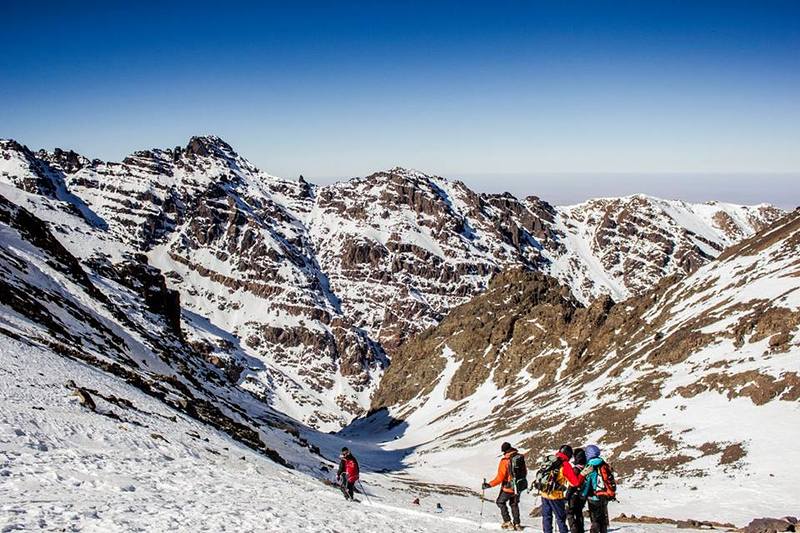
C. There is 1 frequented and 1 far less frequented route from the refuge. The standard frequented South Cwm route (prominent right-hand valley in photo) and the slightly longer, steeper & much less frequented North Cwm route (prominent left-hand valley in photo). Approx 90% or more ascents are made by South Cwm route.
D. In terms of times of ascent/descent (round trip out and back from the refuge) for the South Cwm, it is anywhere 6-8 hours depending on fitness, peoples abilities on snow and the quality / depth of (un)tracked snow.North Cwm route up and South Cwm route down (i.e. a traverse of the peak) is usually anywhere 7-9 hours.
E. Both routes have a steep start from the refuge - the North Cwm route steepest of all. The North Cwm route initially involves a traverse across 35 degree slopes and then straight up a steep slope before gaining the relative flatness of the actual cwm. Have your axe at the ready doing this traverse to arrest any slide - although the run-out is generally not serious it can feel like a long way down to the river bed!Both routes exit onto the relevant col (South Cwm - South Col; North Cwm - North Col) before the climber is required to ascend the relevant ridge to the summit.
The North Ridge is steeper and requires some delightful easy scrambling and a true feeling of an Alpine ridge. It is generally objective free of danger and other than coping with a strong side wind it is generally a safe line.
The South Ridge can be taken direct or avoided by traversing below (western side). Be aware however that this traverse takes the climber above a cliff band - to slide here would not be good! Again depending on the snow conditions, it is often airier but safer to stay on the ridgeline proper rather than do the traverse.
F. As with all winter conditions, you should have axe / crampons (and know how to use them! - but see point A above), winter boots, a rucksac with the usual safety bits and pieces (down jacket / spare food / water / anorak etc) and be mountain aware! Turn back if in doubt about things, your breathing, the weather etc......

2012-04-05

Click here to read 1 more climbing note for Toubkal or submit your own


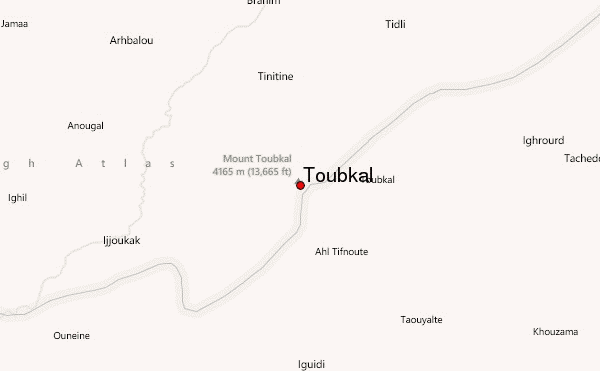
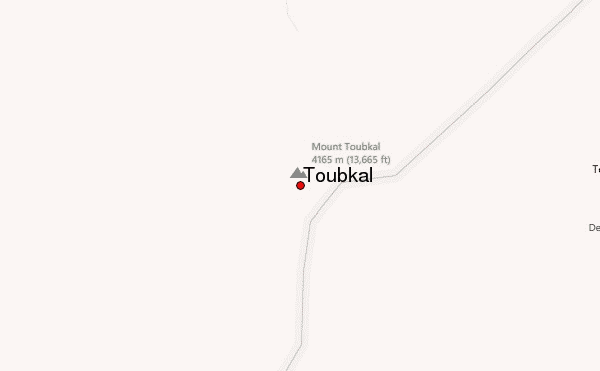
Toubkal Location Map

Select Toubkal Location Map Detail:


Contours: Roads & Rivers: Select a mountain summit from the menu
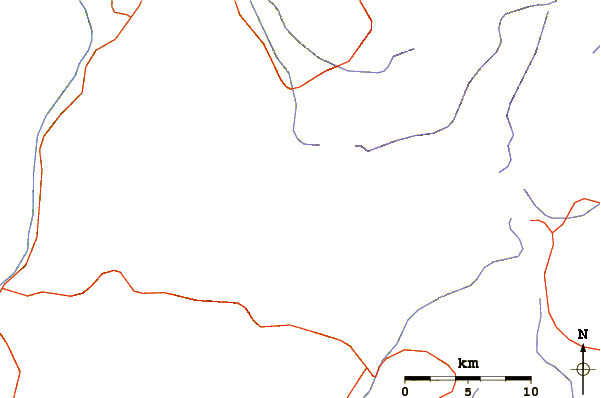
Surf breaks located close to Toubkal Mountain peaks around Toubkal Roads and rivers around Toubkal

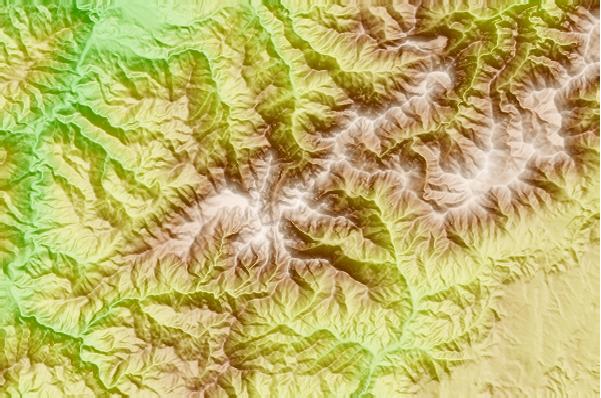
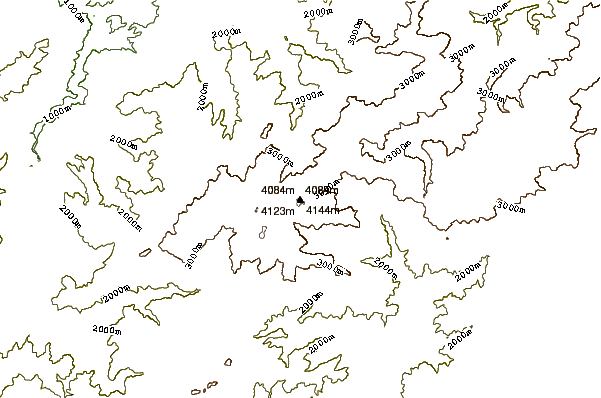
Use this relief map to navigate to mountain peaks in the area of Toubkal.

10 other mountain peaks closest to Toubkal:

1. Toubkal Trekking Summit (4167 m) 0.2 km
2. Timesguida (4089 m) 2.1 km
3. Ras N'Ouanoukrim (4083 m) 4.2 km
4. Angour (3616 m) 15.3 km
5. Imaradene (3551 m) 71.9 km
6. Jebel Anghomar (3610 m) 87.5 km
7. M'Goun (4068 m) 149.0 km
8. Monte Hacho (204 m) 591.3 km
9. Hacha Grande (562 m) 615.0 km
10. Rock of Gibraltar (426 m) 621.7 km